Blog
Elimuhub Education Consultants
10 Types of Learning and How to Teach Them: A Complete Guide to Learning Styles
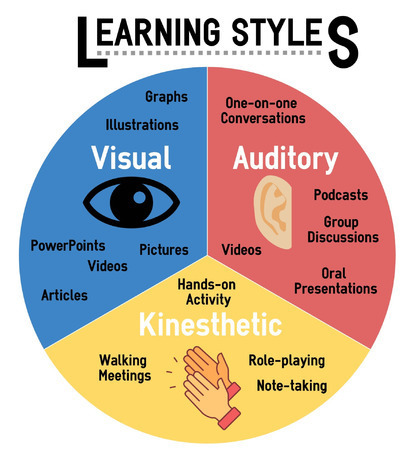
A visual representation of different learning styles.
As anyone involved in education knows, each child is wonderfully unique. Every student brings their own set of strengths and weaknesses to the learning environment. This individuality extends to how students best receive, interpret, organize, and retain information – these preferences are known as “learning styles.” Many learners today even exhibit multiple or overlapping learning styles, a phenomenon called multimodal learning. As educators, understanding these diverse learning preferences is crucial. It empowers us to help students build upon their strengths and achieve deeper, more lasting comprehension. While the well-known VARK model outlines four learning styles (visual, auditory, reading/writing, and kinesthetic), this article expands on that framework, exploring 10 distinct types of learning and providing practical strategies to effectively teach each.
Another significant factor influencing learning and retention is the subject matter itself. It's a common observation that individuals often gravitate towards and excel in fields that align with their natural inclinations. Some thrive in creative disciplines like design, fine arts, and photography, while others find their strengths in logical and analytical areas such as mathematics, engineering, and science. These inherent interests contribute significantly to a student's engagement and success in different learning areas.
The 10 Types of Learning and How to Engage Each Learner
1. Physical (Kinesthetic) Learning
Physical or kinesthetic learners excel through hands-on experience rather than passive listening or sitting for extended periods. They learn best by physically interacting with tangible objects and engaging in active movement. Traditional, lengthy study sessions can feel daunting to them, but they thrive when they can learn by doing. Common traits include restlessness, a preference for practical tasks, and an energetic, outgoing nature.
Ways to engage physical learners:
- Encourage movement-based activities within lessons, e.g., role-playing, simulations.
- Incorporate well-spaced breaks to allow for physical movement.
- Utilize props, interactive models, and manipulatives.
- Maintain a clutter-free learning environment to minimize distractions.
2. Visual (Spatial) Learning
Visual or spatial learners learn most effectively through visual aids such as charts, images, diagrams, and graphs. They have a strong response to colors and mind maps and often utilize their visual memory to retain information over longer periods. Characteristics of visual learners include frequent planning and doodling, good attention spans, keen observational skills, and a preference for visual directions.
Ways to engage visual learners:
- Integrate maps, diagrams, and imagery into lessons.
- Utilize technology like projectors and visual presentations.
- Employ color-coding techniques to highlight key information.
- Encourage the creation and use of mind maps and flowcharts.
3. Auditory Learning
Auditory learners understand and retain information best by hearing it or speaking it aloud. They are often attuned to changes in pitch, tone, and other vocal qualities. They typically prefer discussing topics, participating in debates, and engaging in conversations to aid memorization. Auditory learners can be easily distracted by noise and may frequently hum, sing, or talk to themselves.
Ways to engage auditory learners:
- Vary your pitch and tone while presenting material.
- Utilize recorded voice lessons and audiobooks.
- Encourage class presentations, group discussions, and debates.
- Ask them to verbally teach concepts to others.
4. Verbal (Read/Write) Learning
Verbal learners thrive with traditional learning methods that involve written resources. They learn best through reading written material and by writing information down themselves. They often possess a broad vocabulary and may enjoy using tools like acronyms, rhymes, and tongue twisters. Verbal learners are often avid readers.
Ways to engage verbal learners:
- Incorporate mnemonics (songs, rhymes, acronyms, phrases) into teaching.
- Utilize scripts and written instructions.
- Encourage students to jot down and articulate their ideas in writing.
- Include word games like crosswords and anagrams.
5. Logical (Mathematical) Learning
Logical or mathematical learners have a natural inclination to categorize information into logical groups to facilitate learning. They excel at recognizing patterns and sequences and easily grasp equations, numbers, and relationships. These learners appreciate structure and logic in all things, and mathematics often comes naturally to them.
Ways to engage logical learners:
- Create a clear and easy-to-navigate structure for your lessons.
- Integrate statistics and numerical data into subjects beyond mathematics.
- Encourage the classification of concepts into groups or categories.
- Explore cause-and-effect relationships across all subject areas.
6. Musical Learning
While music or background noise can be a distraction for many, musical learners often learn better with it. They tend to learn effectively through music, beats, and rhythm. Similar to logical learners, they identify patterns and relationships, but in the realm of sounds. Some theories suggest they even think in sounds and rhythms rather than solely in words and pictures.
Unsurprisingly, these learners often develop into musicians or instrumentalists. Frequently, individuals exhibit a combination of auditory and musical learning preferences, which is why strategies for engaging these two styles often overlap.
Ways to engage musical learners:
- Encourage listening to soft background music during individual work.
- Promote the use of songs and rhymes to memorize information.
- Incorporate podcasts and musical elements into lessons where appropriate.
7. Naturalist Learners
Naturalist learners learn best through experimentation and direct practical experiences in the natural world. They enjoy observing and analyzing their surroundings. As the name implies, they often feel a strong connection to nature and retain information most effectively when they are outdoors, interacting with plants, animals, and the environment.
These learners share some similarities with kinesthetic learners in their appreciation for tactile sensations. Overall, they apply scientific reasoning to the world around them and display a keen interest in both natural phenomena and human-made creations.
Ways to engage naturalist learners:
- Organize field trips and outdoor learning experiences.
- Conduct lessons in outdoor spaces whenever feasible.
- Encourage journaling, drawing, sketching, and photographing natural phenomena.
- Assign projects that involve direct interaction with nature, particularly in subjects like biology and environmental science.
8. Linguistic Learners
Linguistic learners represent a blend of auditory and verbal learning styles. They absorb knowledge most effectively by writing, reading, and sounding out material. These learners benefit from traditional learning methods, similar to verbal learners, and also prefer listening to information being presented. They often take detailed notes while studying.
Ways to engage linguistic learners:
- Read aloud to them and encourage them to read material aloud as well.
- Incorporate written projects, essays, and assignments.
- Minimize the overuse of purely visual aids; prioritize verbal explanations and written text.
- Vary your vocal delivery, using different pitches, tones, and even character voices to maintain engagement.
9. Interpersonal (Social) Learners
Social or interpersonal learners thrive when working in groups or collaborating with others. They often emerge as natural leaders, and their peers frequently seek their advice. Social learners learn by relating ideas and concepts to the experiences and perspectives of other people. They are typically empathetic individuals with excellent communication and problem-solving skills. This learning style can often complement one or more of the other learning styles.
Ways to engage social learners:
- Identify their adjacent learning style and incorporate strategies that cater to both.
- Encourage role-playing and collaborative problem-solving activities.
- Assign group projects and discussions.
- Foster a classroom environment that encourages peer teaching and interaction.
10. Intrapersonal (Solitary) Learners
In stark contrast to interpersonal learners, intrapersonal or solitary learners prefer to study in solitude. They are typically independent and introspective, preferring to engage with their own thoughts and ideas without significant external interaction. You might often find these learners sitting quietly at the back of the class, but they can often achieve high levels of academic success. Solitary learning can also align with other learning preferences.
Ways to engage solitary learners:
- Identify their adjacent learning style and incorporate relevant strategies.
- Designate quiet study areas where they can focus without interruption.
- Check in with them individually to understand their progress and needs.
- Provide structured opportunities for individual reflection and independent projects.
- Clearly define expectations for collaborative tasks so they can prepare accordingly.
Beyond Categorization: Embracing Multimodal Learning
It's crucial to remember that students rarely fit neatly into a single learning style. Avoid putting your students in a box. It's more likely that they exhibit a combination of preferences, a phenomenon known as a multimodal approach. Statistics suggest that over 60% of individuals are multimodal learners.
Recognize and appreciate the unique learning profile of each child. You may need to employ a variety of teaching methods to effectively reach every student. Furthermore, learning preferences can even vary depending on the subject matter. Individuals may have stronger inclinations towards certain learning styles for different academic areas. These learning style frameworks provide valuable guidance, but flexibility and observation are key.
As EduSpark, your dedicated digital ally for educational excellence, we empower educators like you to go the extra mile. If you're dedicated to helping your students thrive, explore our insights on Digital Learning Tools to further enhance your teaching strategies. While we currently focus on providing valuable educational content and guidance, stay tuned for future developments that may include tools to streamline your class management. Our commitment remains to support you in nurturing the learners of the future!
Comments
Post a Comment